
15 Most Unbelievable Motorcycle Myths and Misconceptions
Everyone has heard at least one motorcycle myth that sounds believable, but many of them are completely wrong. Movies, social media, and outdated riding advice fuel misinformation, creating false impressions that compromise safety. These pervasive motorcycle myths and structural motorcycle misconceptions do more than just clutter online forums. They directly impact real-world outcomes:
- Rider Safety
- Buying Decisions
- Public Perception of Riders
- Confidence for Beginners
This article separates myths from reality using practical riding knowledge, physics, and established safety facts. By replacing rumour with reality, you can approach your next ride with complete clarity and confidence.
Let’s Connect: Which motorcycle myth did you believe before learning to ride? Let us know in the comments below!
Why Motorcycle Myths Can Be Dangerous
Believing unverified motorcycle advice carries heavy consequences because your physical body serves as your only protection in an accident. Following bad advice on the road can lead directly to preventable crashes. Some widespread motorcycle safety myths actively discourage safe riding practices, convincing riders to skip essential training, reject life-saving technologies, or use poorly fitting gear.
Furthermore, motorcycles and personal protective equipment have evolved dramatically over the last few decades. A handling trick or mechanical assumption that might have been marginally true for a heavy cruiser decades ago is often entirely incorrect and dangerous when applied to a modern machine equipped with advanced tires, suspension, and electronic rider aids. Relying on outdated information puts you at a severe disadvantage when split-second decisions matter most.
1. “Loud Pipes Save Lives”
The Myth
This is one of the oldest and most aggressively defended biker myths debunked by modern traffic studies. The core claim is that installing loud, modified aftermarket exhaust systems alerts nearby drivers to a motorcycle’s presence, creating a protective audio barrier that prevents lane-changing collisions.
The Reality
The loud pipes save lives myth breaks down when you analyze basic acoustics and vehicle insulation. Sound travels backward. Because an exhaust pipe faces the rear of the machine, the vast majority of the decibels are directed away from the traffic ahead of you.
Furthermore, modern cars are built with extensive acoustic soundproofing, double-pane glass, and active noise-cancelling technology. When a driver is travelling at highway speeds with the air conditioning running and the radio playing, they will often hear a loud motorcycle too late, usually only after the bike has already ridden past their front window.
Key Points for Real Safety
- High-Visibility Gear: Human eyes process high-visibility neon colours and reflective strips much faster than ears pick up muffled engine sounds inside an insulated cabin.
- Defensive Riding Techniques: Never assume a driver knows you are there. Ride defensively by anticipating erratic movements before they happen.
- Proper Lane Positioning: Position yourself in a lane where you can see through the driver’s side mirrors of the vehicle ahead, keeping yourself clear of their blind spots.
Ultimately, dynamic visibility and smart road placement are far more effective at keeping you safe than relying on motorcycle exhaust myths to clear a path.
2. “Laying the Bike Down Is Safer Than Braking”
The Myth
This misconception suggests that if a crash looks unavoidable, the rider should intentionally drop the motorcycle onto its side and slide along the asphalt behind it. Proponents claim that sliding prevents you from flying over the handlebars or hitting an obstacle head-on.
The Reality
The moment you intentionally tip a motorcycle onto its side, you trade control for pure luck. Sliding on plastic, aluminum, and chrome removes all steering and braking control, turning you and your machine into an unguided projectile.
Modern rubber tires stop infinitely better than metal scraping pavement. The coefficient of friction between a high-quality rubber tire and asphalt is vastly higher than that of a sparks-emitting steel engine guard. You will always decelerate faster and scrub off more speed by keeping the bike upright and applying maximum braking force.
Key Talking Points
- Emergency Braking Practice: Regularly practicing emergency stops in a controlled environment builds the muscle memory required to slow down safely during a panic situation.
- ABS Technology Advantages: Modern anti-lock braking systems allow you to squeeze the levers with maximum force without fear of skidding.
- Rider Control is Critical: Keeping the bike on its wheels gives you a chance to steer around an obstacle if a full stop is not possible.
3. “Never Use the Front Brake”
The Myth
This classic motorcycle front brake myth warns beginners to avoid the front brake lever entirely. The fear is that grabbing the front brake will lock up the front wheel, causing the bike to flip forward over the handlebars or slide out instantly.
The Reality
The front brake provides most of your stopping power. Due to basic laws of inertia, closing the throttle or applying the brakes transfers the vehicle’s weight forward onto the front tire. This weight transfer pushes the front rubber firmly into the asphalt, dramatically increasing its grip.
Educational Element: Breaking Down the Ratios
On a standard street bike under normal dry conditions, up to 70–80% of your total stopping power comes from the front brake. Relying only on the rear brake increases your overall stopping distance, which can mean the difference between a safe stop and an accident.
Key Discussion Points
- Progressive Braking Technique: Avoid grabbing the lever suddenly. Use a progressive squeeze, smoothly taking up the initial slack to transfer weight forward, then squeezing harder as the tire bites into the road.
- Proper Weight Transfer: Keep your arms straight but relaxed and brace your core to manage the forward inertia without upsetting the chassis.
- Situations Where Caution is Needed: Reduce your front brake inputs when riding over slick paint lines, loose gravel, wet leaves, or when the motorcycle is leaned over in a corner. Utilizing proper motorcycle braking tips ensures optimal stability across all road surfaces.
4. “Bigger Bikes Are Always Safer”
The Reality
Many people assume that a massive, heavy cruiser or high-displacement touring bike offers better protection because of its sheer road presence and physical size. In reality, large motorcycles can be significantly harder to control, especially at lower speeds or during sudden maneuvers.
Smaller, lower-displacement motorcycles help beginners learn faster. A lighter machine is more forgiving of minor throttle, clutch, and balance mistakes, allowing new riders to focus on mastering road awareness.
Key Points
- Weight Affects Maneuverability: A 300-pound motorcycle requires far less physical effort to steer, stabilize, and stop than an 800-pound touring machine.
- Confidence Building: Being able to easily handle a motorcycle removes anxiety, allowing you to focus on building good habits.
- Skill Trumps Size: True safety comes from refined riding skills and muscle memory, not the displacement numbers stamped on your engine block.
Motorcycle Size Comparison
| Feature | Small Bikes (e.g., 250cc–500cc) | Large Bikes (e.g., 1000cc+) |
| Handling Dynamics | Easier handling; light steering input response | Heavy handling; requires deliberate physical input |
| Learning Curve | Better for learning; forgiving throttle response | Steep learning curve; unforgiving power delivery |
| Intimidation Factor | Lower intimidation; easy to manage at stops | High intimidation; heavy and prone to tipping over |
| Low-Speed Maneuvers | Nimble; easy to turn in tight spaces | Harder at low speeds; requires precise clutch control |
5. “You Must Flat-Foot Your Motorcycle”
The Myth
This misconception states that you are not safe on a motorcycle unless you can place the soles of both feet completely flat on the ground while sitting on the saddle. This myth frequently discourages shorter individuals and women from trying certain styles of bikes.
The Reality
While being able to flat-foot both feet can provide an initial sense of security for beginners, it is not a requirement for safe riding. One-foot stops are incredibly common among experienced riders, off-road enthusiasts, and adventure bike pilots.
Key Talking Points
- Seat Height Misconceptions: A wide seat can make a low bike feel tall, while a narrow, sculpted seat can make a tall bike feel easily accessible.
- Proper Stopping Posture: The correct stopping posture involves sliding your left buttock slightly off the seat to plant your left foot firmly on the ground, while keeping your right foot securely on the rear brake pedal to keep the bike stable.
- Adventure Bike Examples: Many adventure riders handle tall seat heights by shifting their weight to one side whenever they come to a stop.
6. “Helmets Block Vision and Cause Neck Injuries”
The Myth
Some riders argue against full-face protection by claiming that motorcycle helmet myths hold true: specifically, that the helmet structure restricts peripheral vision, blocks ambient traffic sounds, and adds weight that can cause spinal or neck injuries during an accident.
The Reality
Modern helmets improve protection without limiting visibility. Department of Transportation (DOT) and ECE certification standards require helmets to provide a minimum peripheral vision field of 105 degrees on each side. Since normal human peripheral vision tops out around 90 degrees, a properly fitting modern helmet does not block your side sightlines at all.
Key Facts
- Head Injury Prevention: Helmets reduce the risk of fatal head injuries by roughly 37% to 42%, making them the single most effective safety tool available to a rider.
- Spinal Injury Protection: Comprehensive real-world crash studies show that helmeted riders are actually less likely to suffer cervical spine injuries during a crash compared to unhelmeted riders, as the helmet shell absorbs and disperses impact forces that would otherwise travel directly down the neck.
Expert Source Mention
Decades of data collected by the National Highway Traffic Safety Administration (NHTSA) and global medical institutions consistently confirm that the answers to questions like “do helmets cause neck injuries?” are a resounding no. Helmets protect your head and neck without compromising your awareness.
7. “ABS Braking Isn’t Safe”
The Myth
A vocal minority of purists claim that Anti-lock Braking Systems (ABS) prolong stopping distances, make a rider lazy, or act unpredictably on loose surfaces, making them less safe than traditional braking setups.
The Reality
ABS is one of the most significant safety advancements in motorcycle history. The system monitors your wheel speed using electronic sensors; if it detects that a wheel is about to lock up and skid during heavy braking, it pulses the fluid pressure to keep the tire rolling at the threshold of maximum grip.
Key Talking Points
- Wet-Road Braking Benefits: ABS prevents low-side crashes on slick surfaces like wet asphalt, grease patches, or painted road markings by preventing wheel lockup.
- New Rider Safety Advantages: It acts as a digital safety net, letting beginners apply maximum braking force during a panic situation without washing out the front end.
- Reduced Skid Risk: ABS keeps the motorcycle stable and tracking straight, giving you the control needed to steer around hazards.
8. “All Motorcycle Gear Is Hot and Uncomfortable”
The Reality
The idea that riding gear means wearing a heavy, stifling black leather jacket in mid-summer heat is completely outdated. Material science has advanced dramatically, making modern technical riding apparel exceptionally breathable, lightweight, and season-specific.
Advanced Ventilation Solutions
- Mesh Jackets: Built with abrasion-resistant armor frameworks surrounding high-airflow mesh panels, these jackets let wind pass right through while maintaining excellent slide protection.
- Ventilated Helmets: Modern helmets feature aero-tested channels that pull cool air across your brow and exhaust hot air out the back.
- Moisture-Wicking Layers: Technical base layers keep your body dry, keeping you cool in high temperatures.
Would you ride more often if the gear felt more comfortable? Modern mesh options might be exactly what you need.
9. “More Expensive Gear Is Always Better”
The Reality
While premium gear often offers high-end finishes, softer liners, and distinct styling, an expensive price tag does not always mean a piece of gear is inherently safer or more protective. Brand-name markup can drive up prices without adding extra safety features.
Key Points
- Certifications Matter: A budget-friendly $150 helmet with a certified ECE 22.06 or Snell rating provides verified impact protection that matches or beats a $700 helmet relying on branding alone.
- Comfort and Fit Are Essential: The safest piece of gear is the one that fits you correctly and that you actually wear on every single ride. An ill-fitting premium jacket can shift during a crash, leaving armor out of place.
- Excellent Budget Protection: Many mid-tier manufacturers offer incredible protection using proven materials like Cordura and CE-rated armor at accessible price points.
10. “Cars Cause Most Motorcycle Accidents”
The Reality
It is easy to blame distracted drivers for every incident, but safety data reveals a more complex reality. While multi-vehicle accidents are common, a significant portion of motorcycle crashes are single-vehicle incidents involving only the rider.
Key Discussion Areas
- Speeding: Entering a corner too fast remains a leading cause of single-bike road departures.
- Poor Cornering Technique: Lacking the skills to lean the bike confidently can cause a rider to panic and run wide into oncoming traffic.
- Rider Inexperience: Mismanaging the clutch, throttle, or brakes can cause simple situations to turn into avoidable accidents.
- Visibility Issues: Failing to position yourself properly in traffic makes it much harder for surrounding vehicles to notice you.
Riding safely is a shared responsibility. Drivers need to watch for motorcyclists, but riders must take control of their own safety by managing their speed, practising their skills, and staying aware of their surroundings.
11. “Drivers Don’t Care About Motorcyclists”
The Myth
Many riders adopt a defensive mindset that borders on paranoia, believing that car and truck drivers are actively out to get them or intentionally ignoring their right-of-way.
The Reality
Most drivers do not cause accidents out of malice; they simply do not see the motorcycle. This is due to a psychological phenomenon called inattentional blindness. Because cars dominate the roadways, a driver’s brain is trained to scan specifically for large objects like cars and delivery trucks. A slim motorcycle can easily disappear into the visual background or hide behind a vehicle’s roof pillar.
Key Points
- Visual Limitations: A motorcycle’s narrow profile makes it incredibly difficult for drivers to accurately judge your closing speed and distance.
- Blind Spots: Modern vehicles feature thick structural pillars that can easily block a motorcycle from a driver’s view.
- Defensive Riding Importance: Instead of driving with anger, assume you are invisible and position yourself where you have an open escape route.
12. “I’m Too Skilled (or Too Careful) to Crash”
The Reality
Overconfidence is one of the most dangerous traits a motorcyclist can develop. Believing that your fast reflexes or years of experience make you immune to accidents can lead to complacency and poor choices.
Key Talking Points
- Continuous Learning: The best riders treat safety as an ongoing discipline, regularly refreshing their skills with advanced riding courses.
- Everyone Makes Mistakes: Even professional racers wash out or misjudge traction limits on unpredictable public roads.
- Situational Awareness Saves Lives: You cannot control external variables like oil spills, sudden mechanical failures, or a deer jumping onto the road. Staying humble keeps your focus sharp.
13. “If You Hit a Small Rock, You’ll Immediately Crash”
The Reality
Many beginners worry that striking a small stone, pothole lip, or piece of road debris will instantly throw the motorcycle out of control. Fortunately, motorcycles are inherently stable machines due to rotational physics and modern chassis design.
Structural Stability Factors
- Tire Design: Modern motorcycle tires feature pliable carcasses and advanced tread compounds designed to deform around small obstacles, maintaining a steady contact patch.
- Suspension Systems: Your front forks and rear shock absorber are designed to absorb vertical impacts, keeping the chassis level and stable.
- Gyroscopic Effect: When a motorcycle is moving at speed, the spinning wheels act like heavy gyroscopes, naturally forcing the bike to track straight ahead.
If you encounter unavoidable road debris, avoid making sudden panic inputs. Do not yank the handlebars or slam on the brakes. Instead, keep your body relaxed, grip the tank with your knees, maintain a steady throttle, and look straight ahead to let the suspension do its job.
14. “One Beer Won’t Affect Riding”
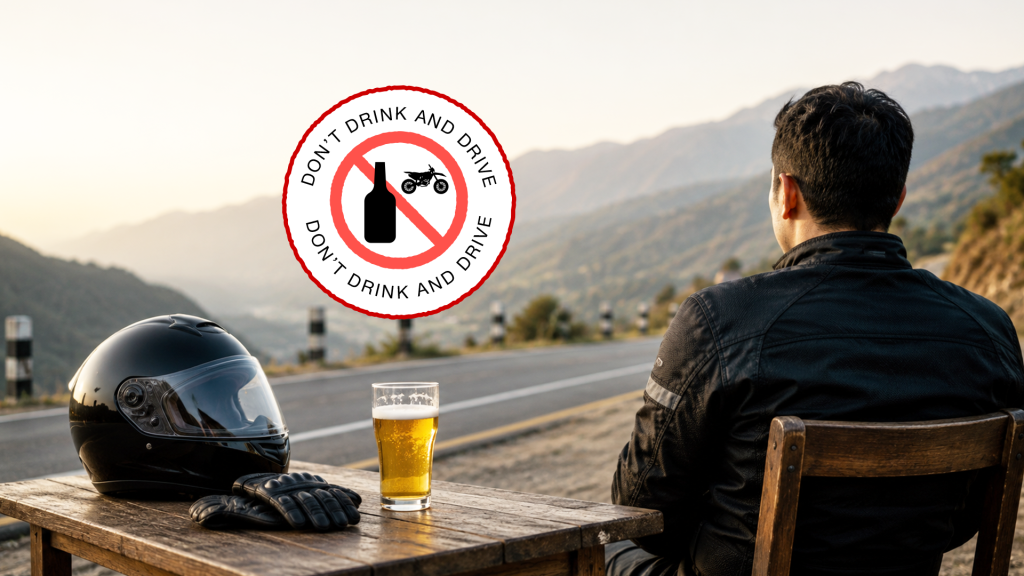
The Reality
Some riders believe that a single alcoholic drink is fine because it doesn’t make them feel tipsy or put them past the legal blood alcohol limit for driving a car. However, operating a motorcycle demands far more physical coordination and active balance than driving a car.
- Balance and Coordination: Even trace amounts of alcohol can disrupt the inner ear fluids that manage your sense of balance, making smooth cornering more difficult.
- Judgment Impairment: Alcohol reduces your ability to accurately judge distances and closing speeds, making it harder to spot hazards in time.
- Increased Crash Risk: National safety statistics show that a significant percentage of single-vehicle weekend motorcycle fatalities involve alcohol consumption.
Choosing to ride demands 100% sobriety. If you plan to have a drink, leave your keys in your pocket and arrange a safe alternative ride home.
15. “Lane Splitting Is Always Dangerous”
The Reality
The practice of lane splitting, riding between slow or stopped lanes of traffic, is often viewed by drivers as reckless behaviour. However, traffic studies show that lane splitting can improve safety and traffic flow when done legally, responsibly, and at reasonable speeds.
Key Operational Distinctions
- Filtering vs. Weaving: Responsible lane filtering involves moving slowly through stopped traffic at a red light to protect yourself from being rear-ended. This is entirely different from weaving erratically through fast highway traffic.
- Regional Differences: Lane splitting is common and legally protected across much of Europe, Asia, and several US states, including California, due to its proven ability to ease traffic congestion.
- Speed Control: The safety advantages of lane splitting disappear when riders move too fast. Keeping your speed within 10–15 mph of the surrounding traffic gives you the time needed to react to sudden lane changes.
Common Motorcycle Misconceptions in Pop Culture
Hollywood has done no favours for public perception, often reinforcing outdated tropes and motorcycle misconceptions that simply do not hold up in reality:
- “All Bikers Belong to Outlaw Gangs”
The reality is that the vast majority of motorcyclists are everyday commuters, weekend touring enthusiasts, charity ride organizers, and ordinary professionals who simply enjoy the freedom of riding on two wheels. - “Sport Bikes Can Outrun Anything”
While modern sport bikes offer incredible acceleration, their top speeds are limited by physics and aerodynamics. On public roads, a rider’s safety is dictated by traffic laws and blind spots, not the speed potential of their machine. - “Motorcyclists Are Reckless Rebels”
The media often portrays riders as daredevils who reject safety gear and love taking risks. In the real world, most riders highly value advanced safety courses, invest in quality gear, and care deeply about arriving home safely.
Closing Thoughts on Motorcycle Myths
Many common motorcycle myths come from outdated information, old rumours, or dramatic movie scenes. Relying on these misconceptions can compromise your safety and limit your enjoyment of riding. True road safety relies on real training, defensive riding habits, and understanding how modern gear and motorcycle technology actually work.
Education helps riders stay safer and more confident every time they hit the road. By swapping old myths for verified safety facts, you can protect yourself from preventable mistakes and get the most out of your riding experience.
Next Steps for Your Journey
- Take a Riding Course: Sign up for an accredited Motorcycle Safety Foundation (MSF) or local safety training course to build your skills with professional instructors.
- Share Your Knowledge: Help keep your fellow riders safe by sharing this guide with beginners and friends who are learning to ride.
- Join the Conversation: Leave a comment below with your thoughts and experiences!
Final Engagement: What motorcycle myth surprised you the most when you first started riding? Let us know in the comments below!
FAQs on Motorcycle Myths
Yes, statistically, motorcyclists face a higher risk of injury or fatality per mile travelled compared to passenger car occupants. This is because motorcycles lack protective features like a metal crumple zone or airbags, making high-quality gear, defensive riding, and proper safety training absolutely vital.
No. Because sound travels backward and modern vehicles feature excellent cabin soundproofing, loud exhaust pipes rarely alert drivers ahead of you in time. Dynamic visibility, such as wearing high-visibility gear, and smart lane positioning, is far more effective at keeping you safe.
Yes. Smaller, lower-displacement motorcycles (typically 250cc to 500cc) are lighter, easier to handle, and much more forgiving of minor mistakes. Starting on a smaller machine helps you build proper control and confidence much faster than starting on a heavy bike.
Yes, ABS is an essential safety feature for riders of all skill levels. It prevents your wheels from locking up and skidding during sudden emergency stops, keeping the bike stable and tracking straight even on slick or wet road surfaces.
No. Comprehensive traffic safety studies confirm that modern helmets protect against head trauma without increasing the risk of cervical spine or neck injuries. In fact, helmets often reduce overall neck injury severity by absorbing and dispersing impact forces.
Lane splitting can be safe and effective when done legally and responsibly in slow or stopped traffic. Moving forward at a reasonable speed helps protect riders from being rear-ended and can ease overall traffic congestion.
