
Common Mistakes Riders Make That Reduce Bike Mileage
Many motorcycle owners often complain of low fuel economy, but few know that, in most cases, it is not the bike but rather their daily riding habits that are the largest culprit. A motorcycle is a well-tuned machine, and the way you treat it reflects on the fuel efficiency of the motorcycle. Most of the riders unknowingly engage in bike riding errors daily that only compound the bike’s mileage.
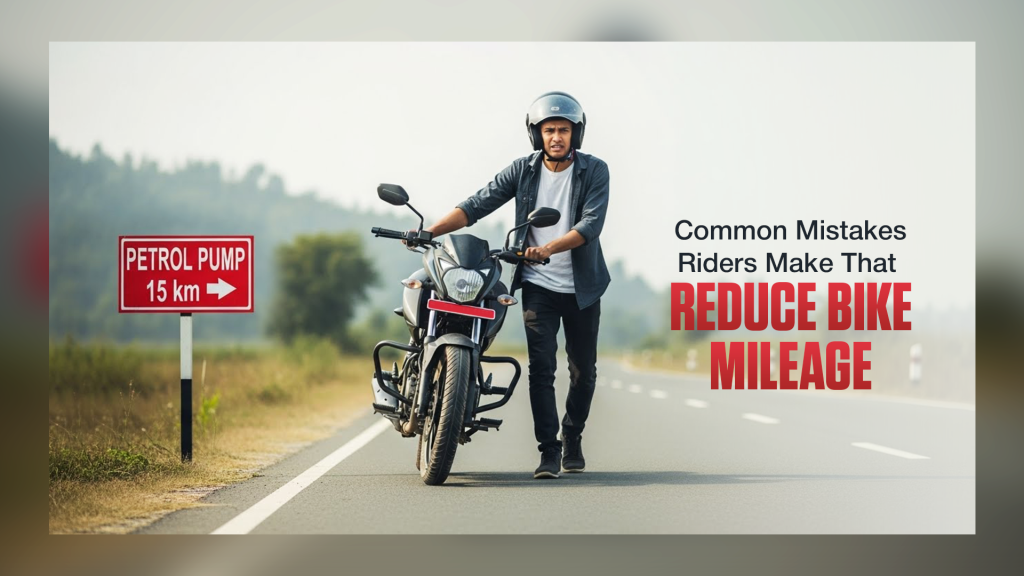
This is a particular problem in countries such as Nepal. With frequent traffic jams in cities, challenging hilly roads, frequent stops, and diverse, uneven terrains, the stress on a bike is higher. This makes efficient riding practices and regular maintenance absolutely crucial for getting the best fuel efficiency. Follow these proven bike mileage tips to get the most out of every litre of fuel.
Understanding What Affects Your Bike’s Mileage
In order to optimally boost your fuel economy, you have to first know the variables involved. The mileage of a bike depends on a number of factors: condition of the engine (tuning and quality of the oil), pressure of the tyres, speed of riding, braking, and the amount of weight carried.

Mileage has a fine line between mechanical issues and the technique of the rider. A poorly maintained bike that is neglected will naturally burn more gas, but even a well-maintained bike will give you low miles in case of an inefficient riding style on the part of the rider. The use of simple bike mileage tips in your life can bring a lot of surprising positive outcomes.
Aggressive Acceleration and Sudden Braking
Riding with an inconsistent, aggressive throttle is one of the most prevalent bike riding habits that instantly lowers the bike mileage. Acceleration causes the engine to consume a lot of fuel in a short period of time. And in the same way, forceful, abrupt braking implies that the energy that you have recently consumed as acceleration is being thrown away as heat.
Bike Mileage Tip: Have a consistent, smooth throttle. Expect traffic to come so that there is no abrupt halting. Slowly push the throttle down, then apply both brakes in a smooth motion to stop. This is a fuel-saving method that places less power load on the engine.
Riding in the Wrong Gear
Riding in too high a gear at low speeds (lugging the engine) or in too low a gear at high speeds (high RPM) are both detrimental to fuel economy. When the engine is struggling or screaming, it is burning excess fuel.
Bike Mileage Tip: To improve bike mileage, learn the sweet spot for your bike. Shift up at the right moment, keeping the engine within the ideal RPM range-this is typically where the engine feels smooth and responsive without excessive noise. Efficient riding entails letting the engine work comfortably.
Ignoring Tire Pressure and Condition
Tyres that are under-inflated or worn out grossly raise the rolling resistance of your bike, and the engine has to work harder to keep you moving, hence leading to a decrease in bike mileage.
Air loss is also a frequent problem, considering that the roads in Nepal are usually rough and there is a high probability of a puncture. Having low pressure not only consumes more fuel, but it also influences handling and tyre life.
Bike Mileage Tip: Every week, ensure that you check the tyre pressure with a good gauge. The pressure should always be kept within the range recommended by the manufacturer, which is usually provided on a sticker near the chain or swingarm. This is an important bike maintenance tip.
Delaying Engine Oil Changes
The lifeblood of your Honda motorcycle is engine oil. With time, the oil is lost, gets contaminated, and fails to lubricate. Old or poor quality oil enhances friction in the engine, making the parts work more, and fuel efficiency is reduced directly.
Bike Mileage Tip: Changing engine oil and oil filter according to the recommended time by the manufacturer is a general rule of thumb as far as maintaining your motorcycle is concerned. In most commuter bikes, this is normally after every 2000-2500 km. Correct grade of quality synthetic or semi-synthetic oil may also be used to achieve better mileage in the motorcycle.
Overloading and Carrying Unnecessary Weight
The heavier the weight, the harder the engine will work and the more fuel it will consume. This involves the transportation of heavy baggage, additional accessories, or even being used to have a pillion on board at all times, even when they are not needed. Each additional kilogram is harder to propel.
Bike Mileage Tip: Keep your bike light to reduce bike mileage. The storage compartments should not be crowded with unnecessary items. For example, when you have custom accessories such as a heavy crash guard or oversized carriers, think about whether they are necessary. Reduce the weight of the day to commute.
Poor Chain Maintenance
The chain has the role of transmitting power to the rear wheel through the engine. A dry, rusted, or incorrectly tensioned (too loose or too tight) chain creates excessive friction and drag, hindering smooth power delivery and negatively affecting fuel economy.
Bike Mileage Tip: This is a simple bike maintenance tip with a big impact. Clean and lubricate your bike chain thoroughly every 500–700 km, or immediately after riding in heavy rain or mud. Ensure the chain tension is set to the manufacturer’s specification. This is an essential bike mileage tip.
Excessive Idling and Short Trips
Idling burns fuel, yet it does not get you anywhere. It is not efficient to sit with the engine running in a long traffic jam or when waiting. Equally, short rides do not allow the engine to operate at optimal temperatures, thus not burning all the fuel.
Bike Mileage Tip: When you expect a more than 30-second stop (e.g. long traffic light or railway crossing), turn off the engine to save fuel. Attempt to make short trips one time so that the engine will have time to warm up.
Ignoring the Air Filter and Spark Plug Health
A combination of clean air and fuel should be perfect in the engine to burn efficiently. A blocked air filter limits the airflow to be limited and the engine runs rich (more fuel than air); therefore, fuel economy is drastically reduced. A defective or worn-out spark plug leads to low combustion.
Due to dusty roads in most areas in Nepal, the air filter should be checked and cleaned more often.
Bike Mileage Tip: Inspect or clean the air filter more often than the scheduled service. Replace the spark plug as recommended by the manufacturer. These simple motorcycle care tips ensure optimal combustion and good bike mileage.
Neglecting Regular Servicing
Some of the most expensive mistakes people make when bike riding include failure or a delay in undergoing regular bike servicing. Service: This is done to guarantee that the entire parts of the bike, including the carburettor/fuel injector, brakes and clutch, are maintained in proper tune and alignment. An engine that is not tuned is inefficient.
Bike Mileage Tip: Never miss out on the service schedule. The advantage of visiting authorised service centres is that they offer the services of skilled mechanics who use original parts and provide the bike with proper engine tuning, which is essential in enhancing the mileage of a bike and prolonging the life of the engine.
Pro Tips to Improve Bike Mileage
Mastering these easy bike mileage tips will help you improve bike mileage immediately:
- Maintain Steady Speed: Ride consistently between 40–60 km/h in the highest comfortable gear.
- Check Tyre Pressure Weekly: Keep tyres inflated to the recommended PSI.
- Change Oil on Time: Use the correct, quality oil and change it every 2000–2500 km.
- Lube the Chain Regularly: Clean and lubricate the chain every 500–700 km to reduce drag.
- Avoid Sudden Movements: Practice smooth acceleration and gentle, predictive braking.
- Service Your Bike Regularly: Never skip a scheduled service appointment.
Keep Your Bike Efficient with Regular Servicing in Nepal
Your machine and you make the most of your miles. You can greatly decrease the loss of bike mileage by removing typical bike riding errors and carrying out regular maintenance. Based on the harsh conditions of riding, professional maintenance is undisputed regarding smooth functionality and fantastic motorbike servicing guidelines.
Stop wasting fuel! Make the first move towards improved mileage. Take your vehicle to a nearby Honda authorised service centre to have a complete mileage check-up and professional tuning.
FAQ Section
-
Why does my bike’s mileage suddenly drop?
A sudden drop is usually caused by a mechanical issue like a clogged air filter, low tyre pressure, a stuck choke, old engine oil, or a spark plug issue.
-
How often should I change my engine oil to improve mileage?
For most commuter bikes, change the oil every 2000–2500 km to ensure minimum friction and maximum efficiency.
-
Can tyre pressure affect fuel economy?
Yes, severely. Under-inflated tyres increase rolling resistance, making the engine work harder, which directly leads to a significant reduction in bike mileage.
-
What is the ideal speed for maximum bike mileage?
The most fuel-efficient speed for most commuter bikes is usually between 40 km/h and 60 km/h in the highest gear.
-
How do I improve mileage in city traffic?
Focus on smooth riding: avoid aggressive acceleration, practice gentle braking, and turn off the engine during stops longer than 30 seconds.
-
Does carrying a pillion reduce mileage?
Yes, carrying a pillion or heavy luggage increases the total load, forcing the engine to exert more power and consequently reducing bike mileage.
-
How often should I clean my bike chain?
You should clean and lubricate your bike chain every 500–700 km, or immediately after riding through rain, mud, or on dusty roads.
