
Month: February 2026
Why Lubricating Your Motorcycle Chain Is Essential: The Ultimate Maintenance Guide
The motorcycle chain is a “set it and forget it” item to many riders until it begins to make noises or worse still, breaks in the middle of a highway. Maintenance is evaded since it is considered a dirty, gruesome task, or maybe it is only the uninformed modern rider who has not considered the mechanical stress on a component so important. However, neglecting this simple task is a recipe for expensive repairs, reduced performance, and compromised safety.
Knowing the importance of lubricating your motorcycle chain is the initial step of becoming a more responsible and wiser rider. In addition to ensuring that everything runs smoothly, the correct lubrication also influences the power delivery of your bike, your wallet and your personal experience with your bike. Whether you are a weekend warrior or a daily commuter, the health of your drivetrain determines the quality of your ride.
This is a complete manual where we will immerse ourselves in the science of chain care, why riders do not take this responsibility seriously and answer the burning questions that any rider will have towards the motorcycle chain lube.
Key Takeaways
- Safety First: Regular lubrication prevents chain failure, which can be catastrophic at high speeds.
- Save Money: Proper care can triple the lifespan of your expensive chain and sprocket kit.
- Intervals: Lube every 500–700 km for road use, or sooner if riding in rain/dirt.
- Process: Clean, dry, and lube the inner side, and let it sit for 15 minutes.
- Products: Use O-ring safe sprays; avoid heavy grease and WD-40 as primary lubes.
What Does a Motorcycle Chain Do?
Its main purpose is transmission of power: it passes the rotating force of the gearbox on the engine to the rear wheel, with the help of which you can move forward. Without this connection, your engine is only a clamorous box of spinning metal.
Chain vs. Belt vs. Shaft Drive
Most motorcycles have chains, although some are driven by a shaft (used on large touring bikes such as BMWs, which offer low maintenance but are heavy), while others are driven by a belt (quiet, and usually used on cruisers such as Harley-Davidsons, but very weak when subjected to high torque). The reason behind the use of chains is due to their light weight, efficiency in transferring power and comparatively simple and cheap replacement.
Nevertheless, since a chain is an open system that is vulnerable to the factors, it requires much more maintenance than its counterparts. Without the protection of a housing (like a shaft drive), the chain relies entirely on the rider to provide a protective barrier through regular lubrication.
5 Reasons Why Lubricating Your Motorcycle Chain Is Essential
If you’ve ever wondered about the mechanical benefits of that sticky spray, here are the five fundamental pillars of chain health:
Reduces Friction and Wear
A motorcycle chain comprises hundreds of metal pins, rollers and plates moving at incredibly high velocities. These components slide against each other thousands of times a minute at highway speeds. Also, with no protective coating of motorcycle chain lube, there is continuous contact between metals. This generates great heat and friction, which literally shaves the metal off, making the chain appear to stretch (which is in fact the pins wearing out, and the gaps between links growing larger).
Prevents Rust and Corrosion
Chains are mostly composed of carbon steel, which is highly susceptible to oxidation. As you ride in the rain, mud or even humid coastal air, the moisture gets on the metal surfaces. Lubrication serves as a water-resistant coating covering the metal against oxygen and water. This is particularly vital during the monsoon season or if you live in coastal environments where salt air can cause rust to form on a dry chain in a matter of hours.
Improves Power Delivery
A dry, “kinked,” or rusty chain requires significantly more energy from the engine to move. Friction acts as a parasitic drain on your horsepower. Keeping the links pliable and the rollers free in rotation will give you a good acceleration and less loss of power between the output shaft of the engine and the rear tire. A well-lubed chain makes the bike feel “snappier” and more responsive to throttle inputs.
Extends Chain and Sprocket Life
When properly maintained and of a good quality, an O-ring chain can last more than 20,000-30,000 km. Conversely, it takes an average of 5,000-8,000km to destroy a neglected chain. Due to the wear, both the chain and the sprockets wear out; a dry chain will soon cut up your sprocket teeth, making them look like shark fins. A complete driving gear costs a lot of money to replace; 200-100 Rs of lube is a trivial amount to ensure you save 3,000 Rs in maintenance.
Enhances Riding Safety
The most important reason why lubricating your motorcycle chain is necessary is safety. A dry chain produces too much heat that is likely to melt the internal rubber O-rings. This causes some “seized links” which do not come around the sprockets in the right way. In extreme instances, the chain may fail as a result of load. When a chain breaks quickly, it may either fling itself against the engine case and break it, or wind about the axle at the back, instantly attaching the back wheel, and producing a dangerous skid or crash.
What Happens If You Don’t Lube Your Motorcycle Chain?
Neglect doesn’t just cause a sudden breakdown; it leads to a slow, frustrating degradation of your motorcycle’s performance. If you skip the lube, you will eventually notice these symptoms:
- Increased Chain Noise: A dry chain produces a distinct rhythmic “clacking” or high-pitched grinding sound as it passes over the sprockets.
- Stiff or Frozen Links: You may see links that stay bent in a “V” shape even on the straight run of the chain. This causes vibration through the footpegs and a “jerky” feel at low speeds.
- Poor Mileage: Increased drivetrain resistance means your engine has to work harder to maintain speed, which directly translates to burning more fuel.
- Uneven Chain Tension: As specific links wear faster than others, the chain will have “tight” and “loose” spots, making it impossible to adjust the tension correctly.
- Higher Long-Term Costs: You won’t just be replacing the chain; you’ll be replacing sprockets and potentially paying for labor more frequently at service centers.
Should I Lube My Motorcycle Chain After Washing?
This is a source of confusion to new riders. Is it better to lubricate my motorcycle chain once I have washed it? The answer to this is yes, yes, yes.
In washing your bike, and particularly when you apply a lot of high-pressure water or soap, you remove the already existing oils and lubricating substances that were preventing rusting of the metal. In addition, water may become stuck in the rollers. When you put the bike away after a wash without lubing the chain, you will most probably find that the very following morning the chain will be covered with flash rust (a bright orange coating).
The Proper Method After a Wash:
- Dry the chain: Use a microfiber cloth or compressed air to remove standing water.
- Short Ride: Some riders take a very brief, 2-minute slow ride to use centrifugal force to fling out water and warm up the chain.
- Apply Lube: Once dry (and ideally slightly warm), apply your motorcycle chain lube to ensure moisture is sealed out.
How Often Should I Lube My Motorcycle Chain?
There is no “one size fits all” answer, as riding conditions vary wildly. However, we can break it down into general rules of thumb.
General Recommendation
For a standard street bike used in fair weather, you should aim to lubricate your chain every two to three weeks. However, riders in harsh environments, such as those dealing with road salt in winter or heavy dust in summer, need to be much more vigilant.
How Often Should I Lube My Motorcycle Chain in KM?
If you prefer to go by the odometer, follow these intervals:
- Standard Street/Highway Use: Every 500–700 km.
- Rainy Weather or Coastal Roads: Every 300–400 km (or after every ride in heavy rain).
- Off-Road or Dusty Conditions: Every 200–300 km.
- Touring: If you are on a long-distance trip, make it a habit to lube the chain every evening when you stop for the night.
Signs Your Chain Needs Lubrication
Keep an eye out for these visual and auditory cues:
- Shiny Rollers: If the center rollers of the chain look like polished silver, they are bone dry. They should typically look slightly waxy or dark.
- Squeaking: Any bird-like chirping coming from the rear of the bike is a cry for help.
- Jerky Acceleration: If the bike feels “clunky” when you roll the throttle on and off, the chain links are likely sticking.
Can I Use Grease on a Motorcycle Chain?
It is a typical find in the older garages: a tub of heavy, multiple-purpose grease. Many riders ask, “Can I use grease on a motorcycle chain?” Although grease is a good lubricating oil in the internal systems, such as wheel bearings or swingarm pivots, it should not be used in modern drive chains due to a number of reasons:
- The “Grit Paste” Effect: Grease is extremely tacky. It acts like a magnet for road sand, dirt, and tiny rocks. This creates an abrasive paste that acts like sandpaper, grinding down your O-rings and metal surfaces.
- No Penetration: Modern chains are O-ring or X-ring types, meaning they have factory grease sealed inside. You need a thin lubricant that can seep under the rollers to keep them moving. Thick grease just sits on top.
- The Mess: Grease will fly off the chain (fling) almost immediately, coating your rear wheel, braking disc, and riding gear in a thick, hard-to-clean sludge.
Types of Motorcycle Chain Lubes
Not all lubes are created equal. Choosing the right one depends on where and how you ride:
- Spray Chain Lube: The most common variety. It comes out as a thin liquid to penetrate the links and then “sets” into a waxy or tacky film.
- Wet Lube: Best for riders in consistently rainy or wet climates. It stays liquid-like and resists being washed off by puddles, though it does attract more dirt.
- Dry Lube: Usually contains Teflon or ceramic particles. It dries completely to the touch, making it the best choice for dusty or off-road environments where you don’t want dirt sticking to the chain.
- O-Ring & X-Ring Compatible: Always check the label! Some harsh cleaners or lubricants can cause the rubber seals in your chain to swell or crack, leading to premature failure.
How to Properly Lube a Motorcycle Chain (Step-by-Step)
If you are ever unsure about the condition of your drivetrain, it is always a good idea to visit a nearby service center for a professional inspection. However, for routine maintenance, you can follow this pro-level process:
- Secure the Bike: Use a center stand or a rear paddock stand so the back wheel spins freely. Never do this with the engine running and the bike in gear; you risk losing fingers in the sprockets.
- Clean the Chain: You cannot effectively lube a dirty chain. Use a dedicated chain cleaner or kerosene and a three-sided “grunge brush” to remove old wax and grit.
- Dry It Off: Wipe the chain thoroughly with a rag.
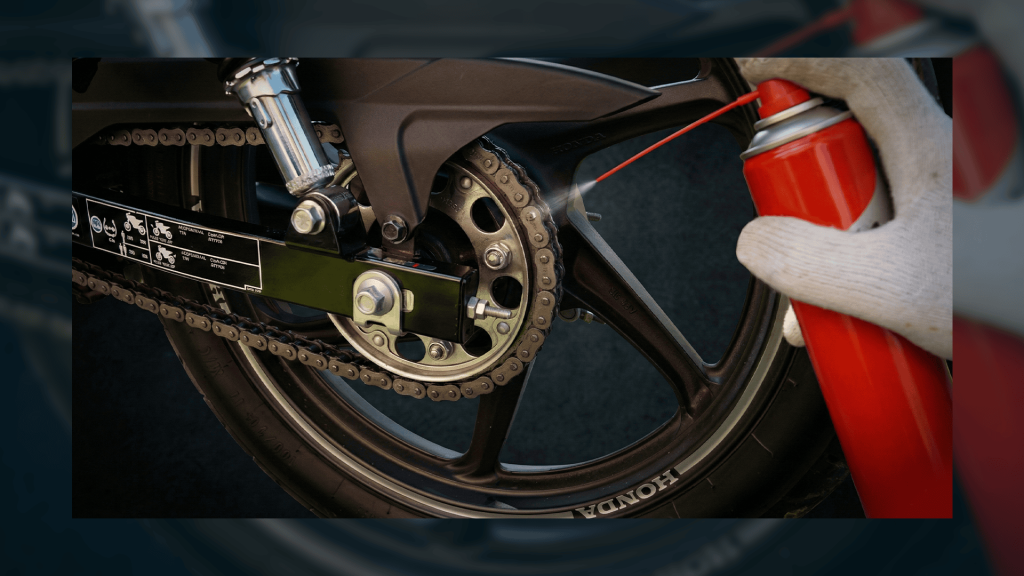
- Apply the Lube: Aim the spray at the inside of the bottom run of the chain. Specifically, aim for the edges of the side plates where the O-rings are located.
- Rotate the Wheel: Spin the wheel by hand several times to ensure the lube works its way into the rollers.
- Let It “Set”: This is the most ignored step. Wait 10–15 minutes before riding. This allows the solvents to evaporate so the lube stays on the chain instead of flinging onto your tire.
Common Motorcycle Chain Lubing Mistakes
- Lubing a Cold Chain: Lube penetrates better when the chain is warm after a ride.
- Using WD-40 as a Lubricant: WD-40 is a great cleaner, but it is too thin to act as a long-term lubricant. It will evaporate, leaving the metal unprotected.
- Over-Lubricating: If the chain is dripping, you’ve used too much. The excess will just create a mess and potentially get on your rear brake rotor.
- Ignoring the Front Sprocket: Dirt builds up behind the front sprocket cover. Clean this area occasionally to prevent “sludge” from falling back onto your clean chain.
Does Chain Lubrication Improve Mileage?
Yes, it does. While the gains aren’t as massive as keeping your tires inflated, a lubricated chain reduces “parasitic drag.” When the engine doesn’t have to fight against friction and stiff links to turn the rear wheel, it operates more efficiently. Riders often report a 2–3% increase in fuel economy after switching from a neglected chain to a properly maintained one.
Most Common Myths About Motorcycle Chain Lubrication
Myth 1 – More Lubricant Is Always Better
Incorrect. Excess lubricant simply flings off and attracts more abrasive road grime, which can actually accelerate wear.
Myth 2 – Any Lubricant Works Fine
False. Using motor oil or household oils will result in “fling-off” and won’t protect the sensitive rubber O-rings like a dedicated motorcycle chain lube.
Myth 3 – Lube Only When the Chain Makes Noise
By the time you hear the chain, the metal-to-metal damage has already started. Lubrication is preventative, not a cure for a ruined chain.
Myth 4 – Chain Lubricants Attract Dirt
Only if you use the wrong type or apply too much. Modern dry waxes and Teflon-based lubes stay very clean.
Myth 5 – Timing of Lubrication Doesn’t Matter
Actually, lubing right after a ride is the gold standard. The chain is warm, allowing the lube to flow into the tightest spots, and it has all night to “dry” and bond to the metal.
FAQs
-
Is chain lube better than oil?
Yes. Chain lube contains “tackifiers” that help it stick to the chain at high RPMs, whereas standard oil will spray off immediately.
-
How often should I lube my motorcycle chain in km?
The standard is every 500–700 km, but check it every 300 km if you are riding in the rain or through dust.
-
Should I Lube My Motorcycle Chain After Washing?
Yes. Washing removes the protective barrier. Reapply lube once the chain is dry to prevent rust.
-
Can engine oil be used on a chain?
In a pinch, yes, but it is messy and short-lived. It’s better than nothing, but not a long-term solution.
-
Do new motorcycles need chain lubrication?
Yes. They usually come with a heavy shipping grease that is very sticky. After the first 500 km, you should clean it and apply a proper lubricant.
-
Should I lube before or after a ride?
After a ride is better. A warm chain accepts lube more easily, and the “dwell time” while the bike is parked prevents the lube from flinging off.
Is your chain looking a bit dry or sounding noisy? Don’t wait for a breakdown! Grab a can of high-quality lube today, or better yet, head to your local mechanic for a full drivetrain inspection.